
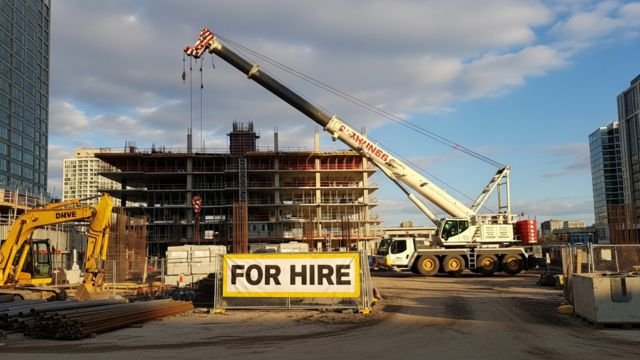
Urban construction sites present some of the most challenging environments for crane operators. When buildings tower overhead and workers cannot see where loads are being placed, the stakes become incredibly high. Understanding how modern crane technology and skilled operators manage these complex scenarios reveals the remarkable precision required in today's construction industry.
Understanding the Challenge of Blind Lifts
A blind lift occurs when the crane operator cannot directly see the load, the landing zone, or both during the lifting operation. In crowded city centers, this situation happens frequently. Tall buildings block sightlines, narrow streets limit positioning options, and multiple structures create visual obstacles at every turn.
The dangers are real and present. Without proper procedures, loads could swing into occupied buildings, strike workers below, or damage expensive infrastructure. Construction teams must rely on sophisticated communication systems and careful planning to execute these lifts safely. Companies specializing in luffing crane hire understand these complexities and provide equipment specifically designed for such demanding conditions.
Why Luffing Cranes Excel in Tight Spaces
Traditional tower cranes swing their jibs horizontally, sweeping large arcs across the sky. This movement pattern becomes problematic when neighboring buildings sit close together. The jib could easily extend over property lines or collide with adjacent structures.
Luffing cranes solve this problem elegantly. Instead of rotating horizontally, their jibs move up and down like a fishing rod. This vertical movement keeps the equipment within the construction site boundaries while still reaching impressive heights and distances. The compact swing radius makes these machines ideal for dense metropolitan areas where every inch of space matters.
When construction managers arrange luffing crane hire for urban projects, they gain access to equipment that respects neighboring properties while delivering powerful lifting capabilities. This consideration for surrounding structures often makes the difference between project approval and rejection from local authorities.
Communication Systems That Bridge the Gap
Since operators cannot see their targets during blind lifts, communication becomes absolutely critical. Modern construction sites employ multiple layers of communication to ensure safe operations.
Dedicated signal persons position themselves where they can observe both the load and the landing area. These trained professionals use standardized hand signals or radio communication to guide operators through each movement. Every gesture carries specific meaning, leaving no room for interpretation or confusion.
Radio communication provides constant contact between the operator, signal person, and ground crew. Clear, concise language follows strict protocols. Operators repeat instructions back to confirm understanding before executing any movement. This redundancy catches potential misunderstandings before they cause problems.
Technology Enhancing Safety and Precision
Modern luffing cranes incorporate advanced technology that significantly improves blind lift safety. Load monitoring systems constantly measure weight and compare it against rated capacities. If a load exceeds safe limits, the system alerts operators immediately.
Camera systems mounted on the jib provide operators with views they could never achieve naturally. High-definition screens in the cab display real-time footage of the load and destination, essentially eliminating the blindness from blind lifts. Anti-collision systems detect nearby structures and other cranes, automatically preventing dangerous movements.
GPS positioning allows operators to know exactly where their hook sits in three-dimensional space. This precision proves invaluable when working among existing structures where centimeters matter. For regional projects requiring versatile lifting solutions, options like franna crane hire southern highlands offer mobile alternatives that complement tower crane operations for ground-level material handling.
Planning Makes Perfect Execution Possible
Successful blind lifts never happen accidentally. Extensive planning precedes every operation. Lift directors create detailed plans specifying load weights, rigging configurations, travel paths, and landing procedures. These documents undergo review by safety professionals before work begins.
Site surveys identify potential hazards and establish clear zones. Workers know exactly where they can stand safely during lifting operations. Exclusion zones keep unnecessary personnel away from danger areas. Emergency procedures outline responses to equipment failures or unexpected situations.
Weather monitoring ensures conditions remain safe throughout operations. Wind speeds at ground level differ dramatically from conditions hundreds of feet up. Professional operators know when conditions exceed safe parameters and halt operations accordingly.
The Human Element Remains Essential
Despite technological advances, skilled operators remain the most crucial element in safe blind lift operations. Experience teaches operators to feel their machines, sensing subtle vibrations and movements that indicate load behavior. This intuition develops over years of practice and cannot be replaced by technology alone.
Training programs prepare operators for every conceivable scenario. Simulators allow practice with dangerous situations without real-world consequences. Continuing education keeps skills sharp and introduces new techniques and equipment features.
The construction industry relies on professionals who take pride in their craft and prioritize safety above speed. When selecting luffing crane hire services, construction managers should verify operator credentials and company safety records before signing contracts.
Building Safely in Growing Cities
As cities continue growing upward and inward, the demand for sophisticated lifting solutions increases. Blind lifts will remain a reality of urban construction, requiring continued innovation in equipment, training, and procedures. The combination of specialized equipment, advanced technology, skilled operators, and rigorous planning makes these complex operations possible while protecting workers and the public alike.